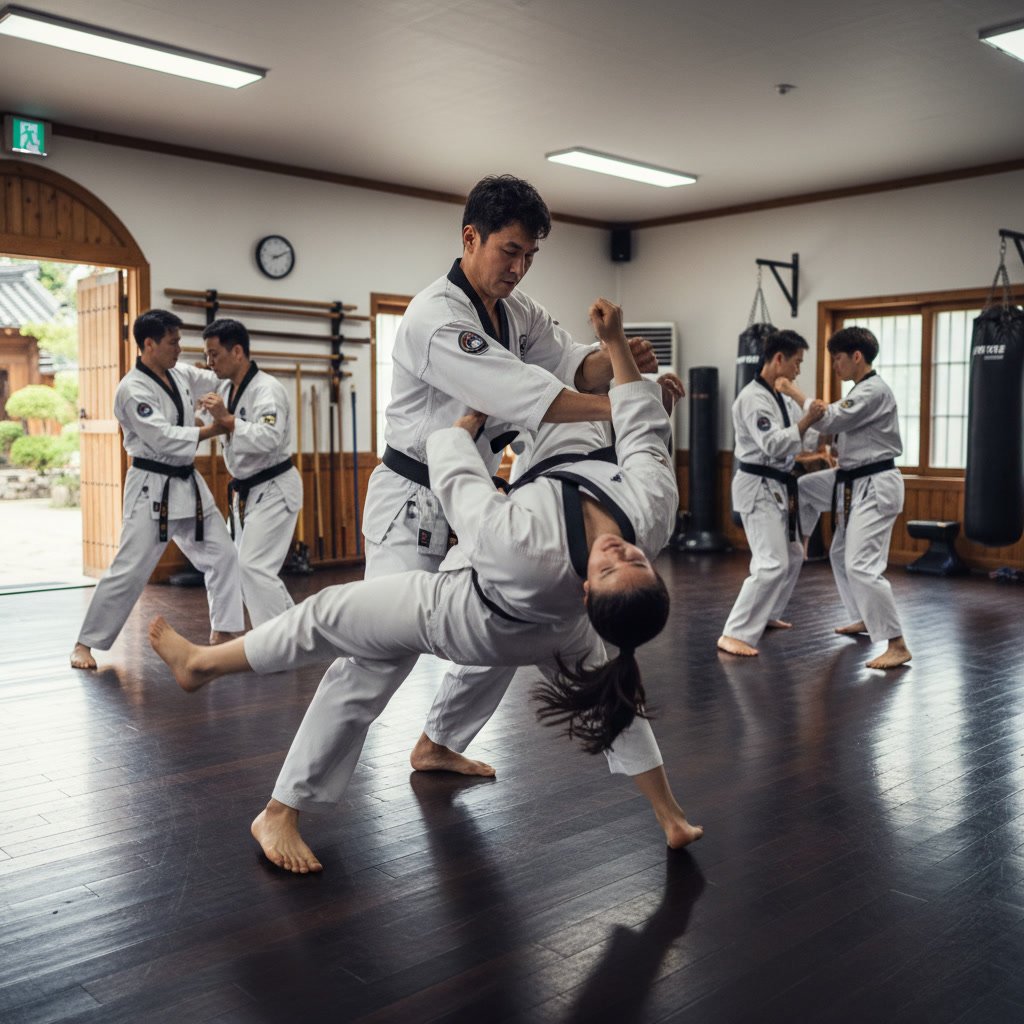
Hapkido joint locks and throws provide the missing piece for martial artists who primarily train in striking systems. When a punch or kick fails to stop an attacker, or when distance collapses into close-range grappling, joint manipulation and throwing techniques become essential survival tools. Combining these grappling skills with striking creates a truly comprehensive fighting ability that addresses every range of combat.
Why Striking Arts Need Grappling Skills
Most traditional striking martial arts teach excellent punching, kicking, and footwork. These techniques work brilliantly at medium to long range. The problem emerges when an opponent closes the distance, grabs your clothing, or initiates a clinch. Your kicks lose effectiveness at six inches. Your punches lack room to generate power. This is where strikers without grappling training find themselves vulnerable.
Real altercations rarely stay at the perfect striking distance. Attackers lunge forward, grab, or push. Environments include walls, furniture, and confined spaces that eliminate kicking room. A complete self-defense system must account for these realities rather than assume ideal conditions.
The Natural Progression from Distance to Close Range
Combat naturally flows through distinct ranges: kicking range, punching range, trapping range, and grappling range. Smart fighters control which range the fight occurs in, playing to their strengths. Strikers want distance. Grapplers want to close that gap.
When you train only in Taekwondo or similar striking systems, you excel at the first two ranges. But the moment someone successfully closes past your strikes, you enter unfamiliar territory. Joint locks and throws become your tools for that final range, giving you options when striking space disappears.
How Joint Manipulation Controls Opponents Without Striking
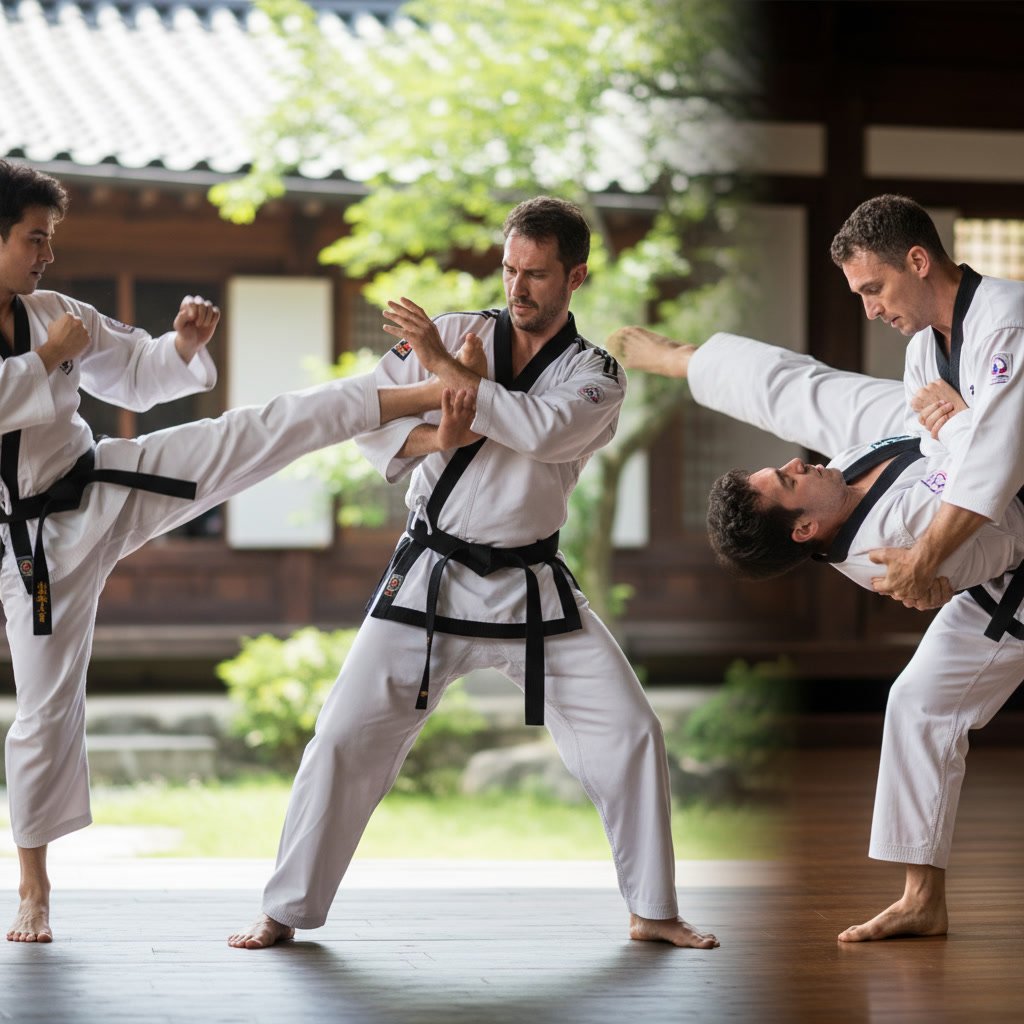
Joint locks apply pressure to anatomical weak points in the wrist, elbow, shoulder, or fingers. Unlike strikes that require space and momentum, these techniques work in tight quarters. A simple wrist lock can control a larger opponent by exploiting the mechanical limits of human joints.
The beauty of joint manipulation lies in its scalability. You can apply just enough pressure to escort someone away, or increase force to immobilize an aggressive attacker. This control spectrum proves invaluable in situations where full-power strikes might be inappropriate or legally problematic, yet you still need to protect yourself.
Five Ways Throws Complement Striking Techniques
Throws offer unique tactical advantages that strikes cannot replicate:
- They end fights decisively by removing an opponent’s ability to continue attacking after hitting the ground hard
- They work when your hands are occupied or grabbed, using an attacker’s grip against them
- They multiply effectiveness on hard surfaces where the ground becomes an impact weapon
- They create escape opportunities by generating distance and disrupting an opponent’s balance
- They conserve energy compared to extended striking exchanges, using leverage instead of muscle
When combined with striking, throws become even more potent. A quick jab to distract or stun sets up easier entries for throwing techniques. Conversely, the threat of a throw makes opponents hesitant, opening opportunities for clean strikes.
Training Integration at Jean’s Taekwondo INC in Lakeland
Jean’s Taekwondo INC incorporates multiple martial arts disciplines to build well-rounded fighters. Students learn how Hapkido techniques flow naturally from their striking foundation. This cross-training approach mirrors how integrated systems adapt to different scenarios and body types.
The integration starts with recognizing transition moments. When your kickboxing combination gets smothered, your muscle memory automatically shifts to joint locks. This seamless transition only develops through deliberate practice that bridges both arts.
Wrist Locks as the Bridge Between Striking and Grappling
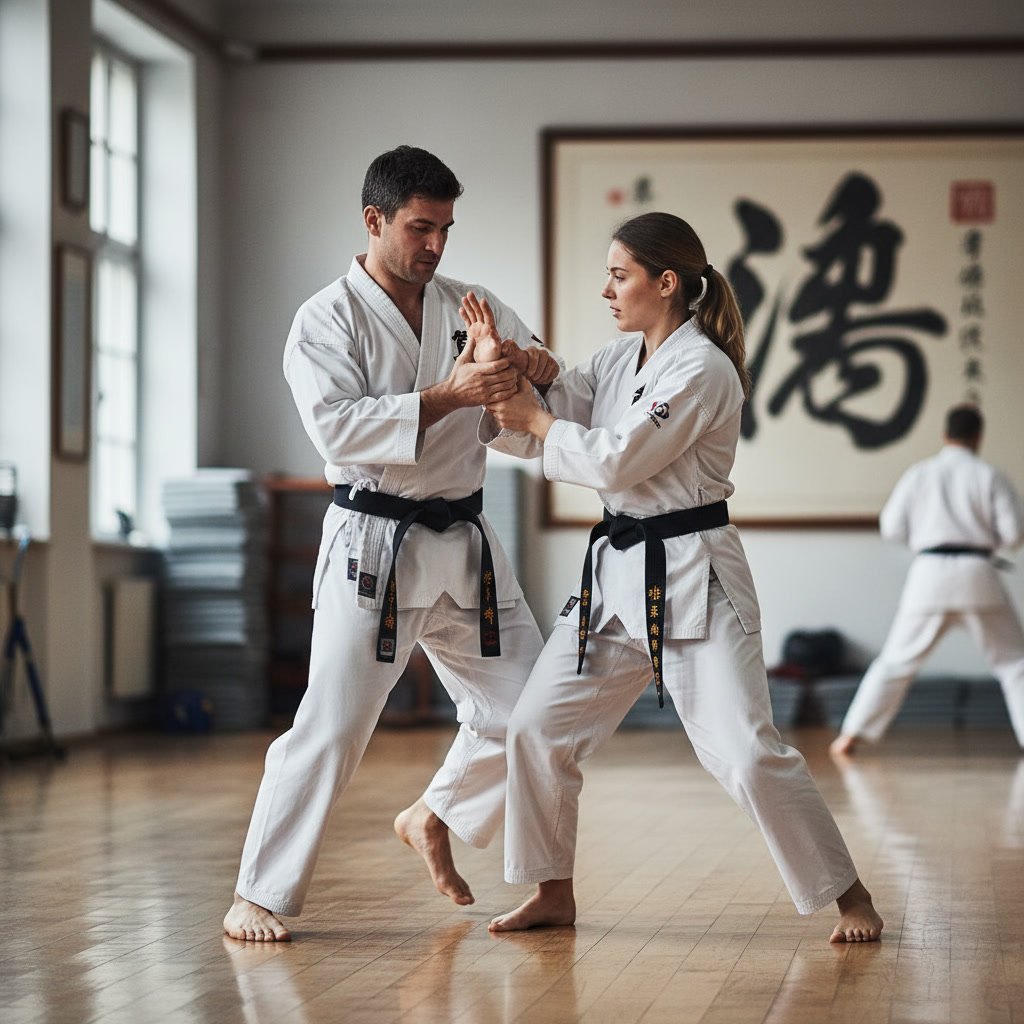
Wrist locks serve as an ideal entry point for strikers learning grappling. They require less strength than many throws and connect naturally to blocking movements you already know. When you block a punch, your hands are already positioned near your opponent’s wrist. A simple rotation and pressure converts that defensive motion into a controlling lock.
The wrist contains eight small bones with limited range of motion. Applying rotational pressure in the direction the joint cannot bend creates immediate compliance. A 15 to 20 degree movement past normal range produces enough discomfort to control most people without causing injury.
Hip Throws and Sweeps from the Clinch Position
After landing strikes, opponents often grab or clinch to neutralize your offense. This clinch position is prime territory for hip throws and foot sweeps. These techniques use minimal strength by exploiting leverage points and off-balancing.
A basic hip throw positions your hip as a fulcrum underneath your opponent’s center of gravity. When you lower your base and lift while turning, physics does the work. Your opponent rotates over your hip and lands on their back. The same mechanics apply to sweeps, where you remove one of their weight-bearing legs while controlling their upper body.
Striking arts teach explosive hip rotation for powerful kicks and punches. That same hip movement drives effective throws. The body mechanics transfer directly, making throws easier to learn than most strikers expect.
Combining Strikes with Joint Locks for Maximum Effect
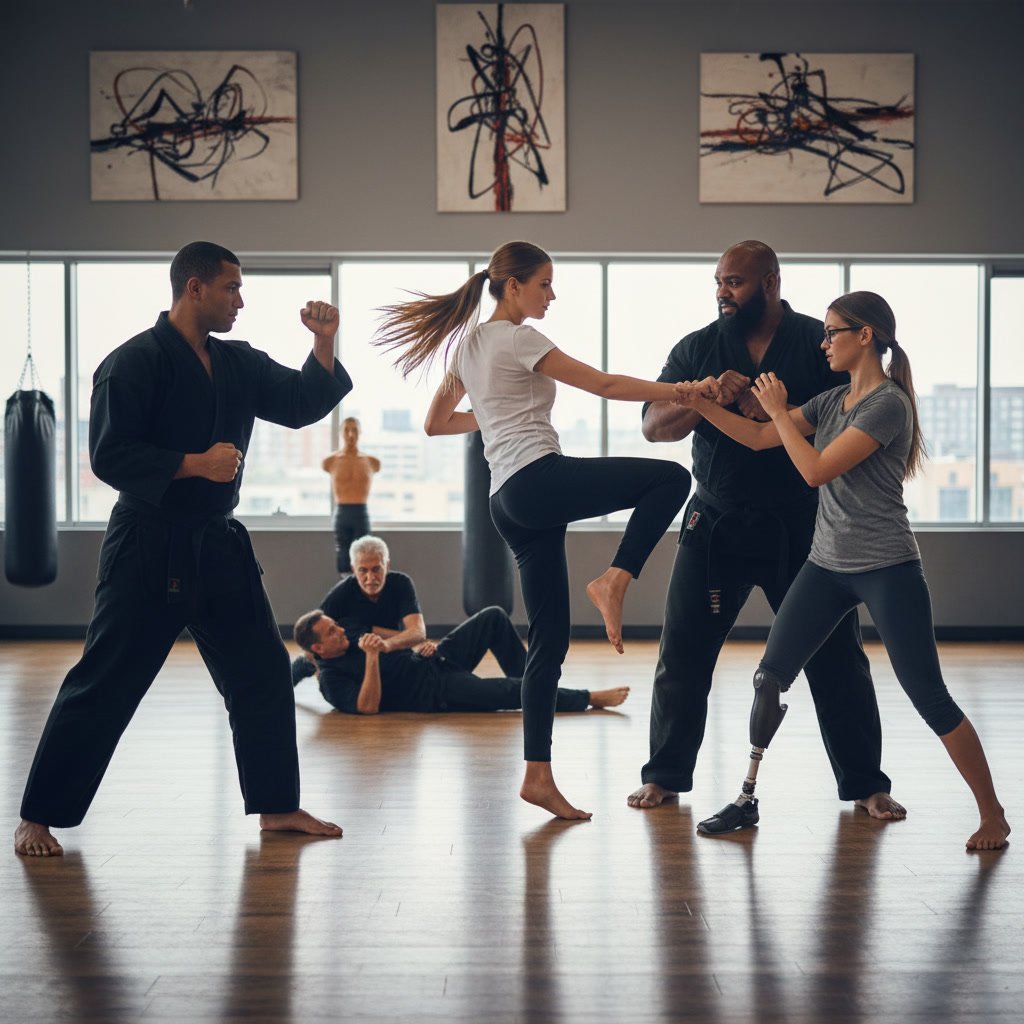
The most effective approach uses strikes to set up locks and locks to create striking opportunities. A quick strike to the solar plexus causes an opponent to bend forward and drop their hands. Their wrist is now exposed and their structure compromised, making a standing arm lock simple to apply.
Conversely, when you have someone in a wrist lock, their attention and resistance focus on that pain point. Their head becomes a stationary target. A knee strike or elbow becomes devastatingly accurate against an opponent who cannot move to evade. This is why women’s self-defense training emphasizes these combinations for maximum effectiveness against larger attackers.
Pressure Points and Joint Manipulation Work Together
Many joint locks become significantly more effective when combined with pressure point strikes. The median nerve runs through the forearm and becomes vulnerable during certain wrist locks. A thumb press on this nerve while applying a lock amplifies the pain and control exponentially.
This combination approach reflects how traditional Korean martial arts were designed. They never separated striking from grappling. The artificial division between these elements came later through sport specialization. Training both together recreates the original complete fighting method.
Building Instinctive Responses Across All Ranges
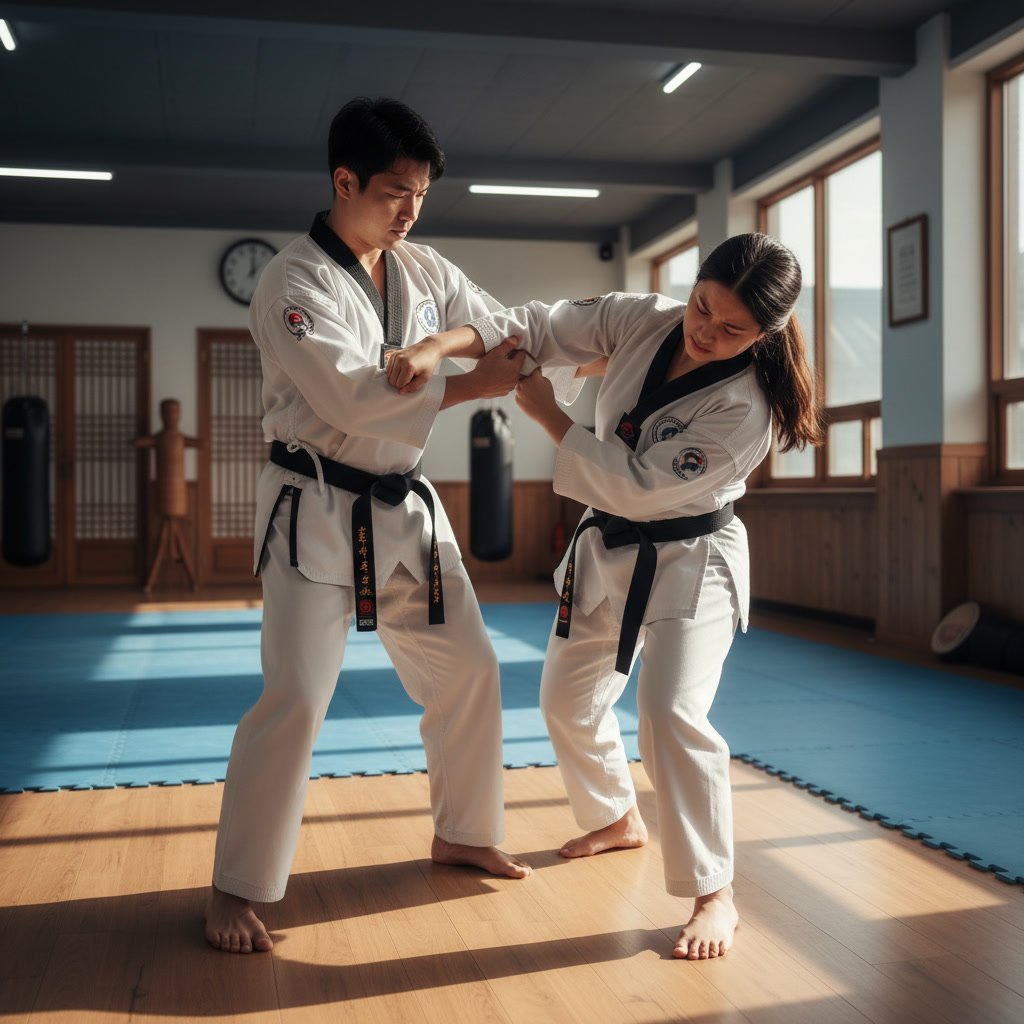
The true value of cross-training appears under stress. When adrenaline floods your system and fine motor skills degrade, you rely on deeply ingrained patterns. If you only know striking, you freeze when grabbed. If you train both, your body automatically adapts to the range.
This instinctive adaptability requires specific drilling. You practice flowing from a punch to a wrist lock to a throw as one continuous movement. The transitions become as automatic as the individual techniques. This is the core principle behind how muscle memory works for self-defense situations that demand immediate, correct responses without conscious thought.
Creating a Complete Martial Artist Through Balanced Training
Mastering both striking and grappling transforms you into a complete martial artist with no exploitable gaps. You become comfortable at every range, capable of controlling the distance and choosing your preferred tactics. More importantly, you possess backup options when your primary approach fails.
This completeness extends beyond physical techniques. The mental flexibility required to switch between ranges builds adaptability that transfers to life outside the dojo. You learn that different situations demand different tools, and rigidity leads to failure.
Striking arts provide speed, distance control, and explosive power. Joint locks offer precision control and scalable force. Throws create decisive endings and escape options. Together, they form a comprehensive skill set that addresses real-world violence in all its messy, unpredictable forms.
If you want to develop well-rounded martial arts skills that work at every range, Jean’s Taekwondo INC offers integrated training that combines striking with grappling techniques. Our instructors teach how these arts complement each other to create genuine self-defense ability. Call +18635851952 to learn more about our programs and schedule your first class.