
When starting self defense system training, your first priorities should be awareness, basic defensive positioning, and escape fundamentals. These core elements create the foundation for every advanced technique you will learn. Physical strikes and complex combinations come later, after you understand how to recognize danger, protect vulnerable areas, and create distance from a threat.
Why Foundation Skills Matter More Than Advanced Techniques
Many beginners assume self-defense training begins with punches, kicks, and dramatic takedowns. The reality is different. Your body needs to understand basic movement patterns and defensive reflexes before adding power or complexity. Foundation skills build muscle memory that activates under stress, when fine motor control disappears and your training must operate on instinct.
Professional instructors structure training around progressive skill development for a specific reason. A person who masters fundamental positioning and awareness will outperform someone with flashy techniques but poor fundamentals. The difference becomes obvious in sparring sessions and, more importantly, in actual confrontations.
Situational Awareness as Your Primary Defense Tool
The most effective self-defense technique is avoiding confrontation entirely. Situational awareness training teaches you to read environments, identify potential threats before they escalate, and position yourself advantageously in public spaces. This skill set prevents more attacks than any physical technique ever will.
Awareness training covers exit identification, crowd behavior analysis, verbal de-escalation cues, and personal space management. You learn to trust instinct when something feels wrong, rather than dismissing gut feelings out of politeness. Most attacks succeed because the victim ignored early warning signs that their subconscious registered but their conscious mind dismissed.

Essential Stances and Protective Positioning
Your first physical skills involve body positioning. A proper defensive stance keeps you balanced, protects vital targets, and allows quick movement in any direction. This stance becomes your default position whenever you feel uncomfortable or threatened.
The basic defensive stance features feet shoulder-width apart, knees slightly bent, hands raised naturally to chest level, and weight distributed evenly. This position looks casual enough to avoid escalating a situation while keeping you ready to defend or escape. You should be able to hold this stance comfortably for extended periods without fatigue.
Training at facilities offering a complete self-defense system emphasizes stance work across multiple disciplines, ensuring your foundation translates to different scenarios and threat types.
Three Critical Escape Movements to Master First
Escape techniques take priority over strikes because creating distance is always your primary goal. These three movements form the core of beginning training:
Wrist releases: When someone grabs your wrist, arm, or clothing, you need reliable release techniques. These movements exploit anatomical weak points in the attacker’s grip, using leverage rather than strength. A 120-pound person can break free from a 200-pound attacker using proper wrist release mechanics.
Bear hug escapes: Front and rear bear hugs are common in assaults. Escape drills teach you to create space by attacking the attacker’s balance, dropping your weight, and using specific body movements that break the hold regardless of size differential.
Ground recovery: If taken to the ground, you must return to standing position immediately. Ground fighting favors larger, stronger attackers and eliminates your escape options. Recovery drills teach protective positioning on the ground and explosive movements to regain your feet.
Basic Strikes for Women and Beginners in Lakeland
After mastering defensive positioning and escapes, you add basic strikes. These techniques require minimal training to execute effectively under stress. The best beginner strikes target vulnerable areas and use natural body weapons you can deploy from awkward positions.
Palm heel strikes to the nose or jaw use the solid base of your palm rather than fragile knuckles. Elbow strikes generate massive power from close range where punches lose effectiveness. Knee strikes to the groin or midsection require no distance and work when grabbed or held.
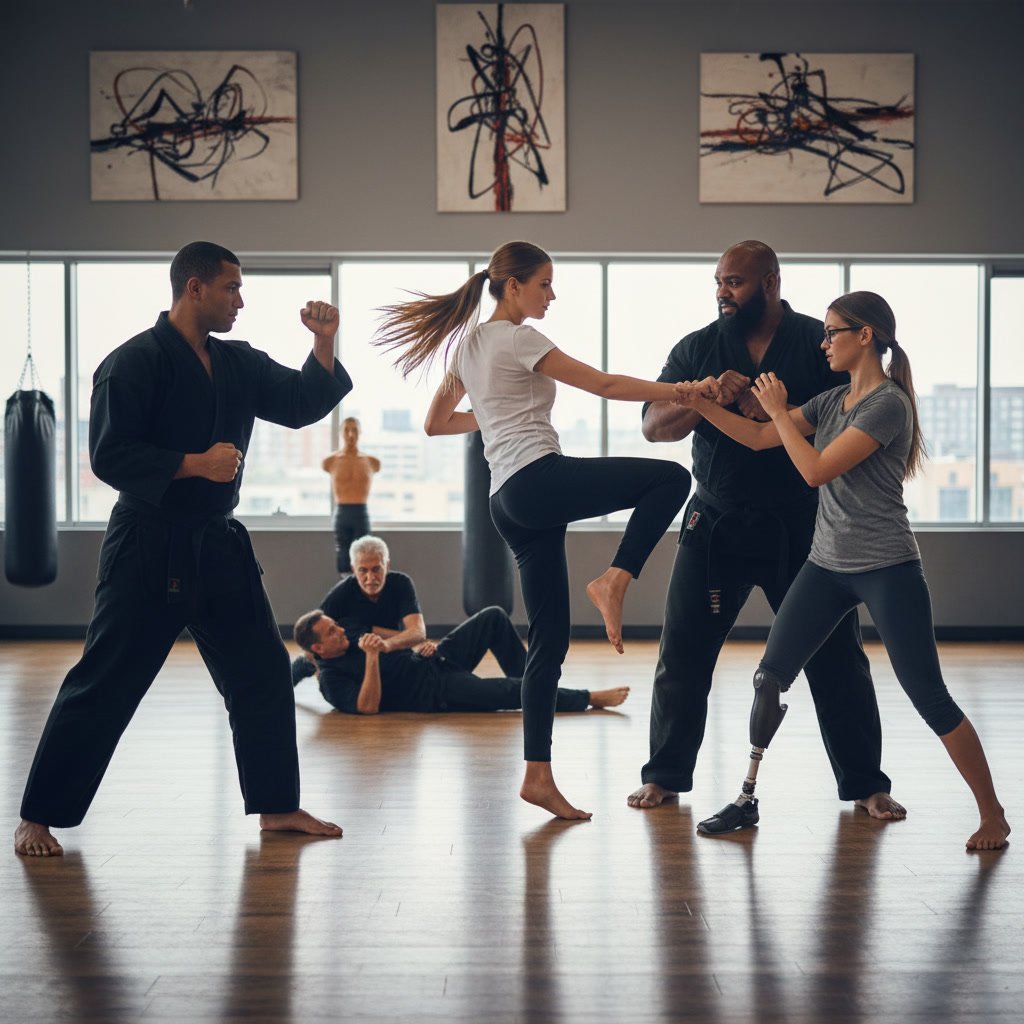
Programs specializing in women self-defense focus heavily on these practical strikes that work regardless of athletic background or physical strength. The emphasis remains on techniques that function when terrified, in restrictive clothing, or while carrying bags or children.

Understanding How Distance and Timing Create Safety
Distance management determines whether you control an encounter or the attacker does. Training teaches you to recognize four combat ranges: kicking distance, punching distance, trapping distance, and grappling distance. Each range requires different defensive strategies.
Beginners learn to maintain maximum distance from potential threats while keeping awareness of their surroundings. If someone closes distance aggressively, you either create separation or prepare for contact. The worst scenario is standing at mid-range, too close for safety but too far to control the attacker.
Timing drills develop your ability to recognize the pre-attack indicators most aggressors display. Weight shifts, shoulder tension, eye movement, and hand positioning telegraph incoming attacks. Recognizing these signs gives you a half-second advantage that determines the outcome.
Building Cardio Fitness for Sustained Defense
Self-defense encounters spike your heart rate to 180-220 beats per minute within seconds. Without cardiovascular conditioning, you exhaust in under 30 seconds, leaving yourself vulnerable. Physical fitness is not optional for effective self-defense.
Beginning training includes cardio conditioning specific to defensive scenarios. High-intensity interval training mirrors the explosive effort patterns of actual confrontations. You learn to maintain technique while breathing hard, with elevated heart rate and stress hormones flooding your system.
Endurance training also builds the mental resilience to continue fighting when tired or hurt. Many attacks succeed simply because the victim gives up mentally before being physically overwhelmed. Conditioning teaches your mind that exhaustion is temporary and you can push through it.
Mental Preparation and Stress Response Training
Your body’s stress response during an attack triggers tunnel vision, auditory exclusion, time distortion, and loss of fine motor control. These physiological changes are automatic and unavoidable. Effective training works with these responses rather than against them.
Scenario-based drills introduce controlled stress during practice. Instructors add verbal aggression, sudden movements, or surprise elements to training exercises. Your nervous system learns to function under pressure, reducing the shock factor of an actual confrontation.
Visualization exercises prepare your mind for potential scenarios. You mentally rehearse defensive responses to common attacks, building neural pathways that activate under stress. This mental practice supplements physical training and improves reaction speed when it matters.
Understanding how complete self defense systems work for real world situations helps you appreciate why mental preparation receives equal emphasis with physical technique in comprehensive programs.

Integrating Multiple Disciplines for Complete Protection
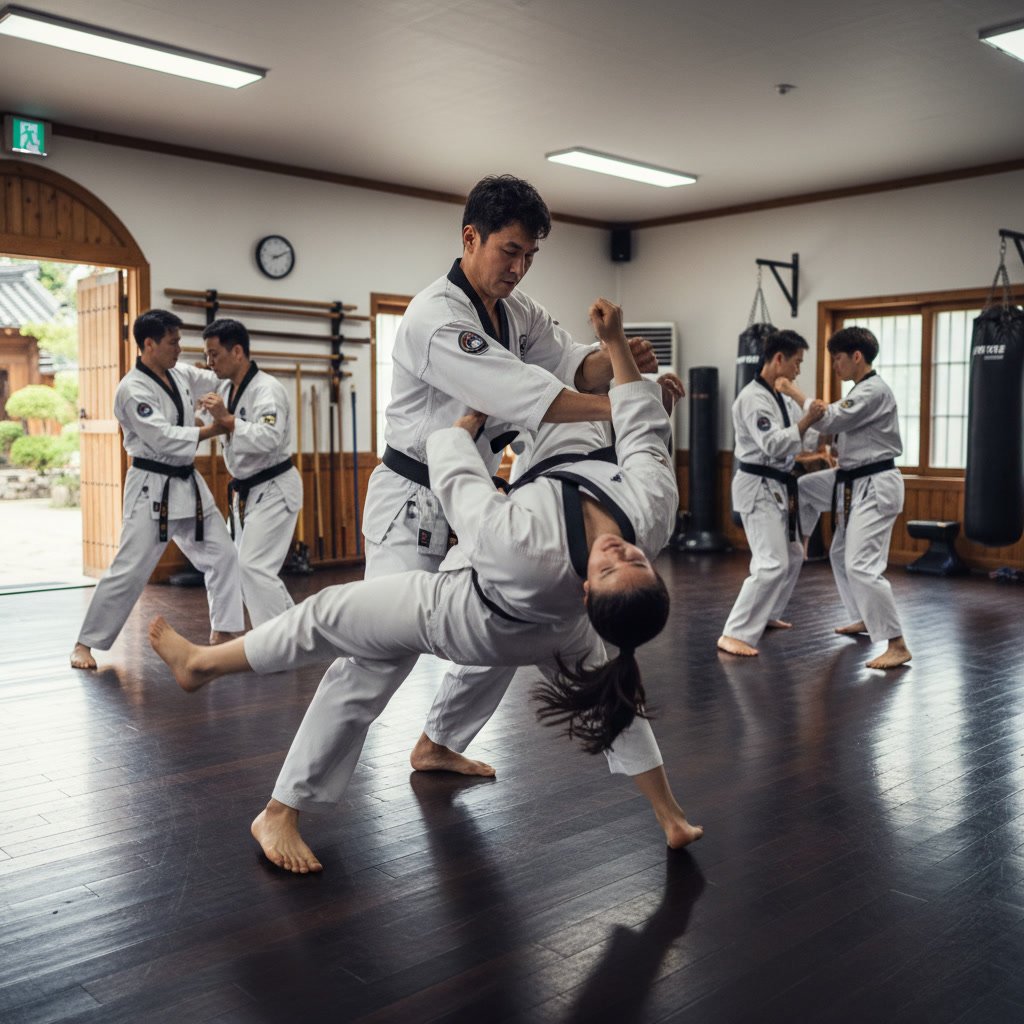
Effective self-defense draws from multiple martial arts traditions, each contributing specific strengths. Taekwondo develops powerful kicks and distance management. Hapkido teaches joint locks and throws for close-range control. Kickboxing builds striking power and defensive movement.
Beginning students do not need to master multiple arts simultaneously. Your initial training focuses on whichever system forms the foundation at your school, then gradually introduces complementary techniques from other disciplines. This approach prevents overwhelming beginners while ensuring comprehensive skill development over time.
The integration model makes sense when you consider that attackers do not limit themselves to one fighting style. Your defensive skills must work against grabs, strikes, tackles, and weapons. Training in how integrated self defense systems combine multiple martial arts prepares you for unpredictable real-world violence.
Practice Frequency and Skill Retention for Beginners
Motor skill development requires consistent repetition over weeks and months. Training twice weekly produces measurable progress within three months. Training three to four times weekly accelerates development significantly. Once-weekly training maintains existing skills but creates slow improvement.
Each technique requires approximately 500 repetitions to execute correctly under calm conditions, and 3,000 to 5,000 repetitions to perform reliably under stress. This reality means beginners should focus on a small number of core techniques rather than learning dozens of movements superficially.
Quality practice beats quantity every time. Thirty minutes of focused, deliberate practice with proper form outperforms two hours of sloppy repetition. Instructors correct mistakes immediately during beginner training because improper technique becomes harder to fix after muscle memory develops.
Your Next Steps in Self-Defense Training
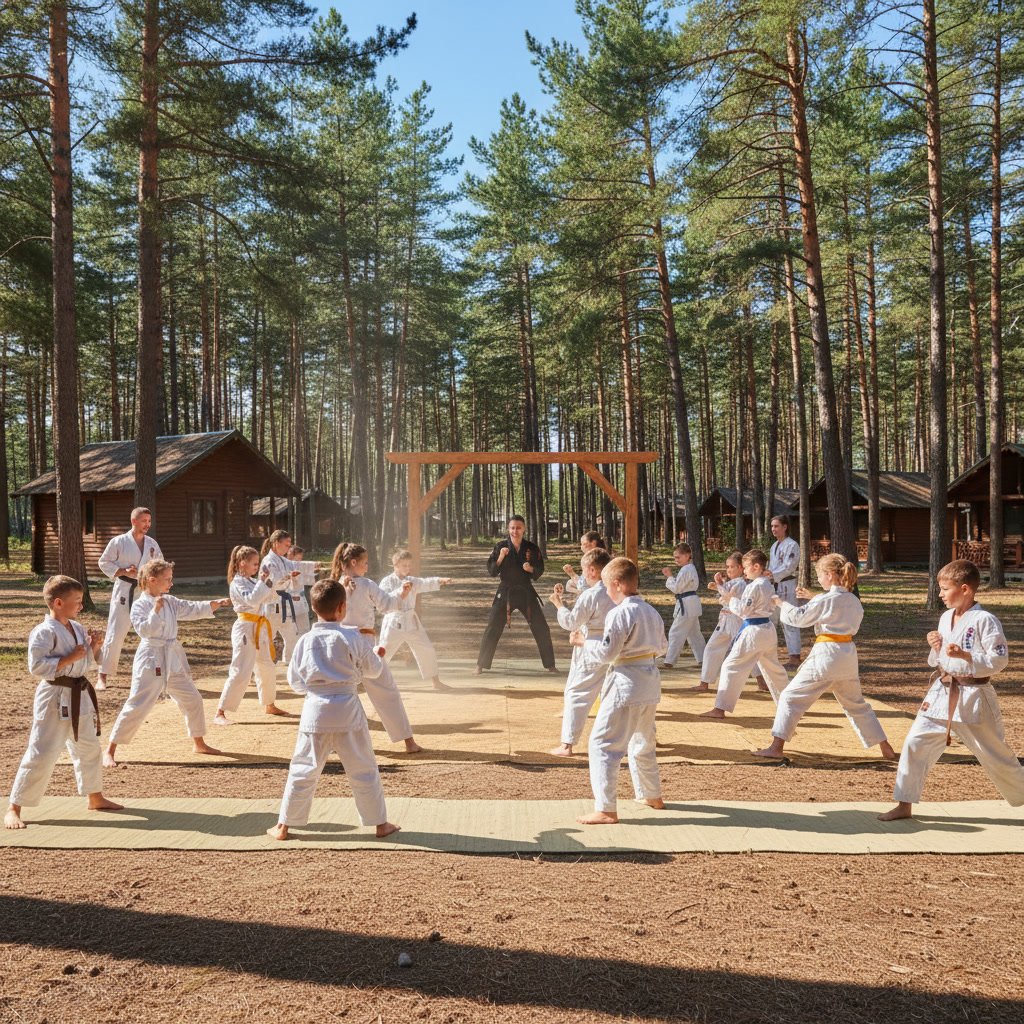
Starting your training journey requires finding qualified instruction that emphasizes practical application over sport competition. Look for programs that include scenario training, multiple defensive ranges, and stress conditioning alongside traditional technique work. The best training environments maintain supportive atmospheres where beginners feel comfortable making mistakes and asking questions.
Your first weeks focus entirely on fundamentals, awareness skills, basic positioning, and simple escape techniques. This foundation seems less exciting than advanced techniques, but it determines your success in every future skill you develop. Trust the process and resist the urge to skip ahead.
Jean’s Taekwondo INC offers comprehensive self-defense training that builds your skills progressively from fundamental awareness through advanced defensive techniques. Our experienced instructors work with students at every level, creating a supportive environment where you develop real-world defensive skills and genuine confidence. Ready to start your training? Call +18635851952 to schedule your first class and experience how proper instruction transforms your ability to protect yourself.