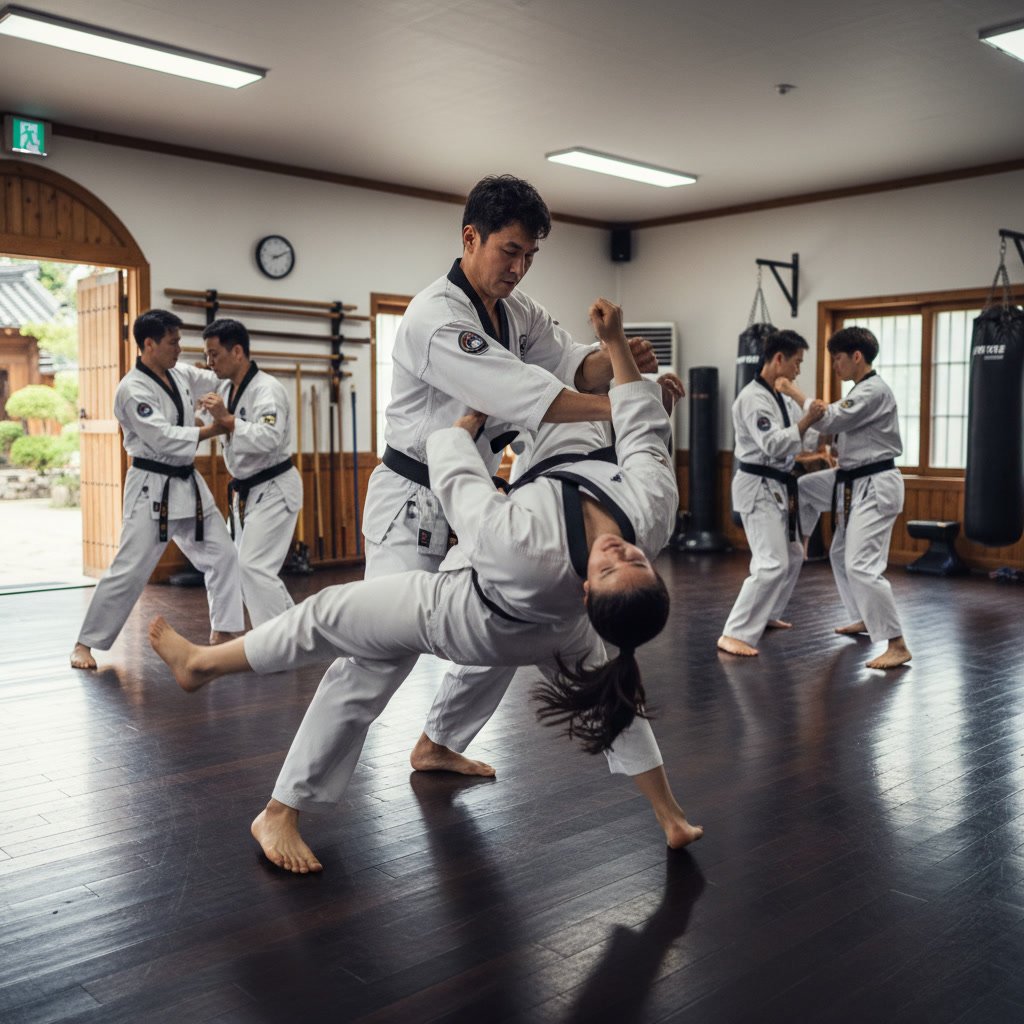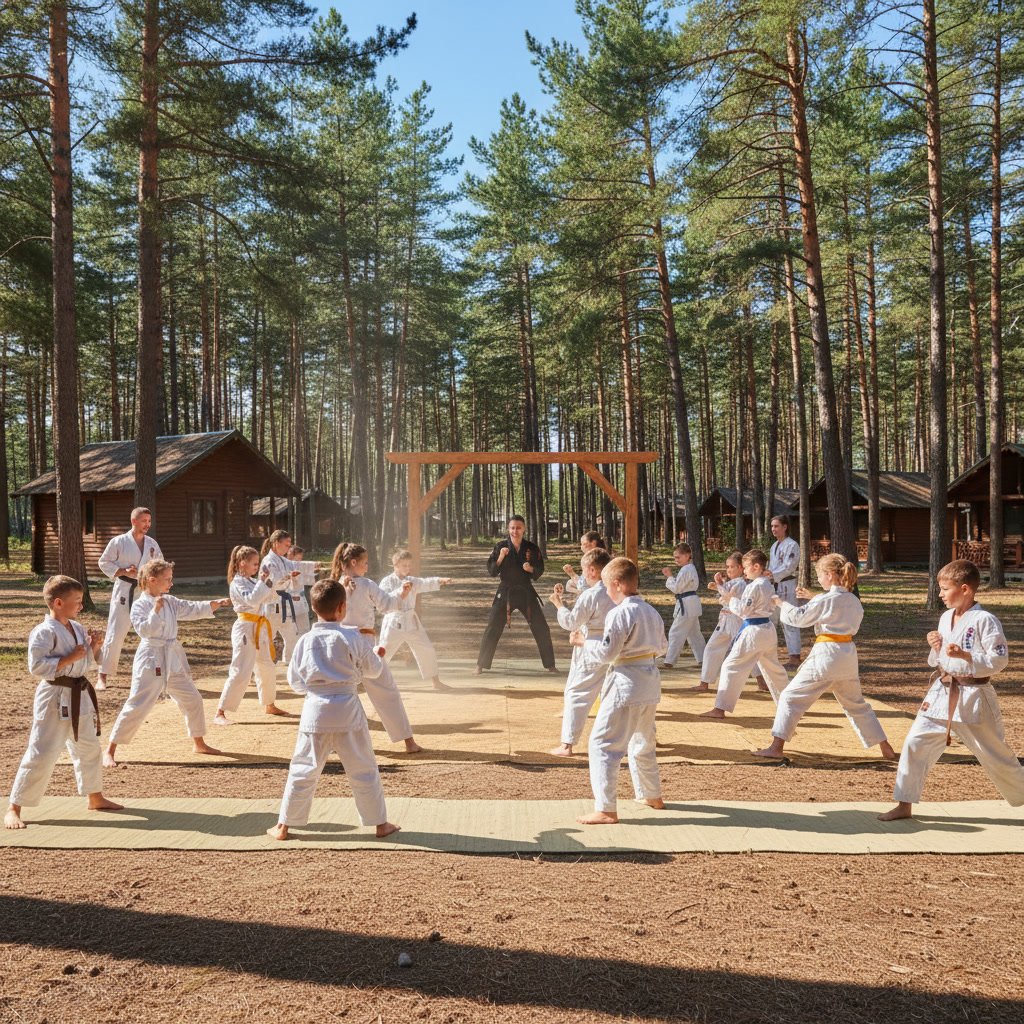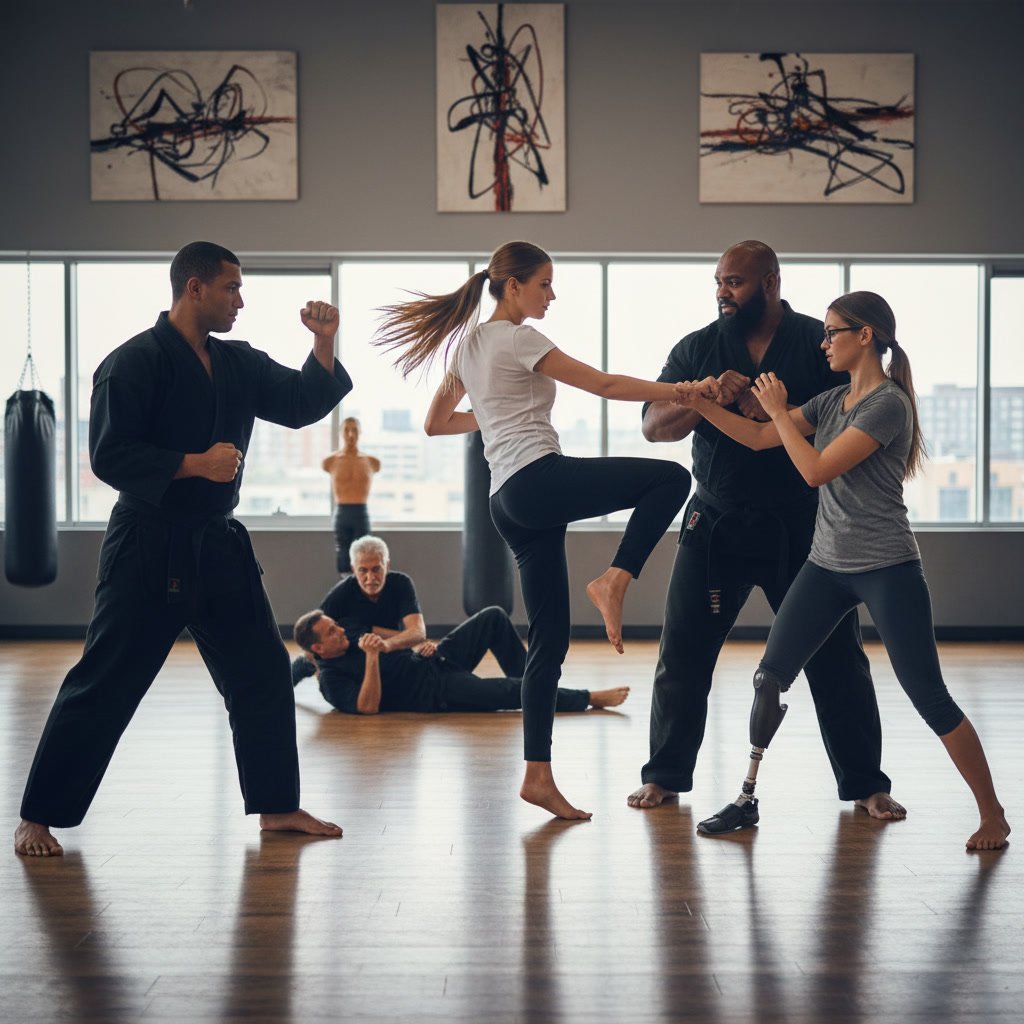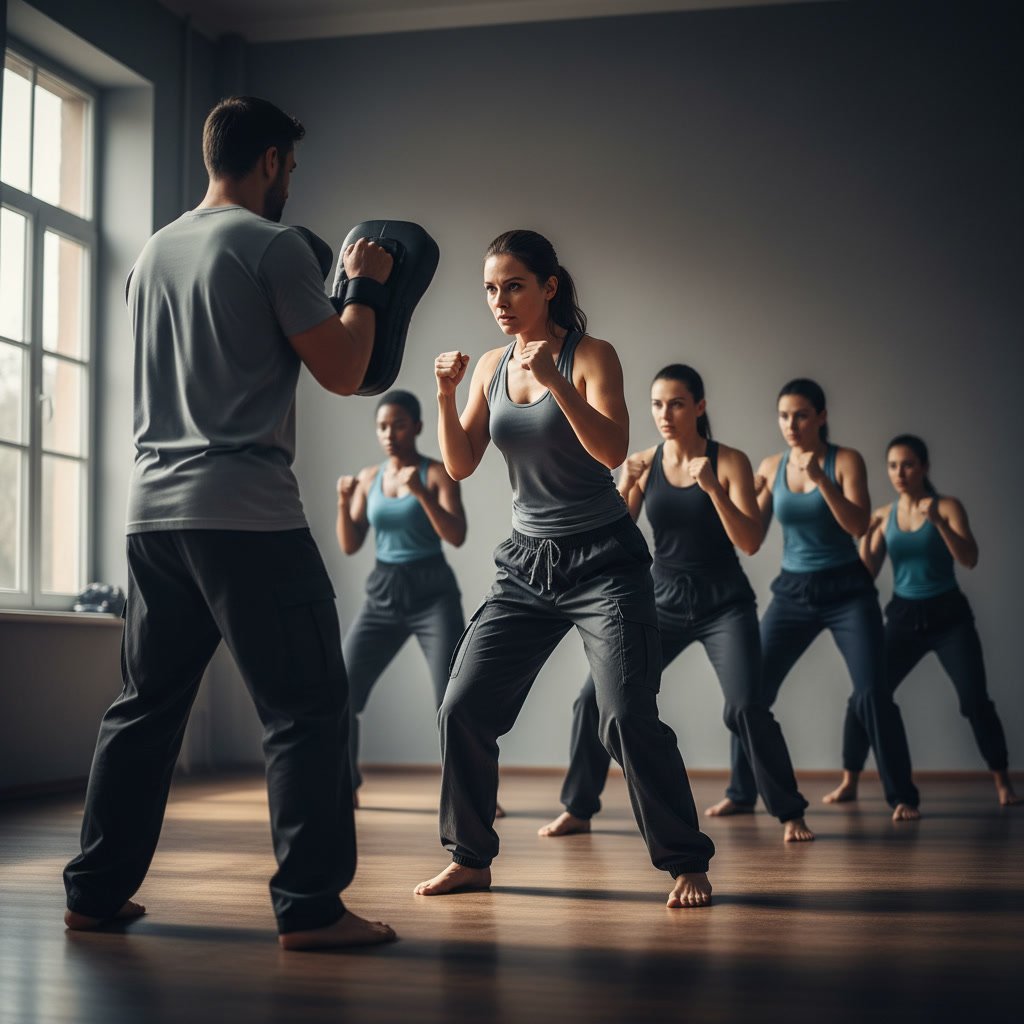
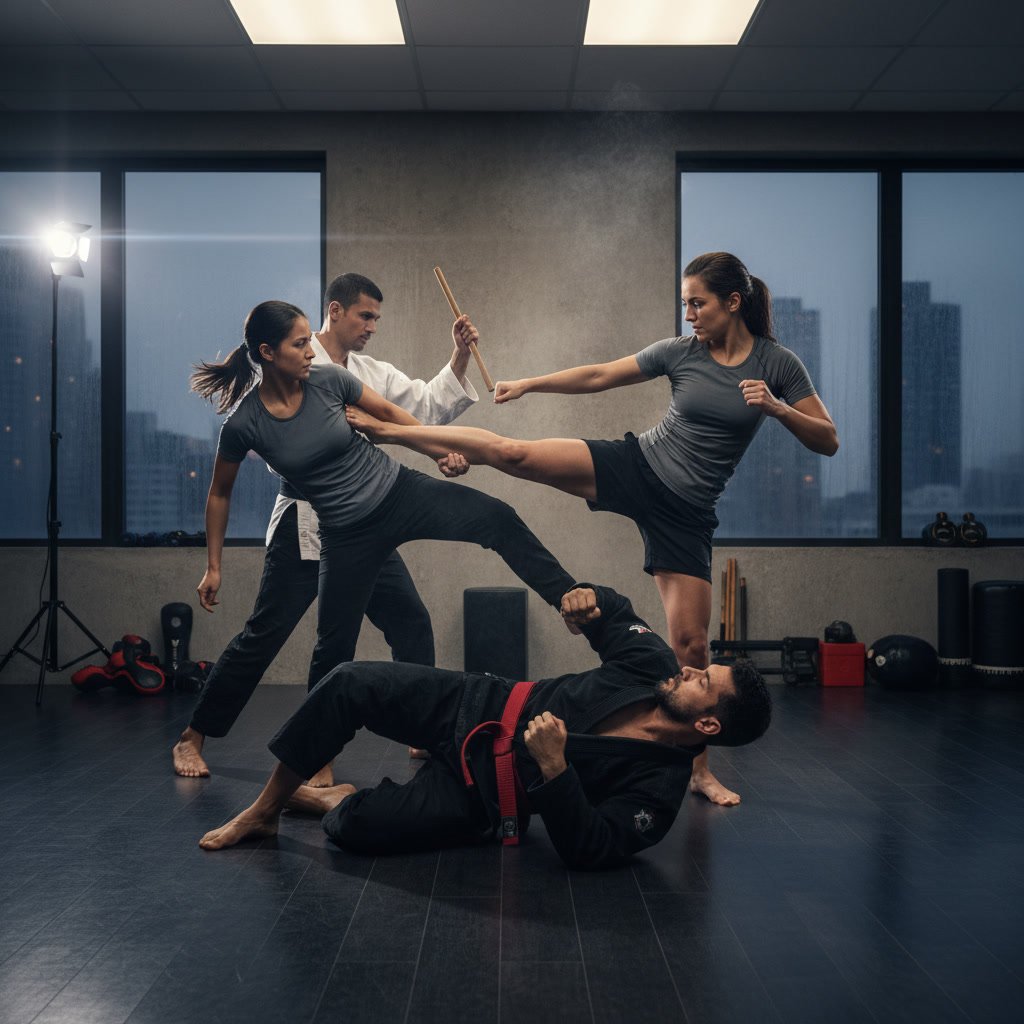
An integrated self defense system merges striking, kicking, and grappling techniques from different martial arts disciplines to create a comprehensive approach to personal safety. Rather than relying on a single style, this method draws on the explosive kicks of Taekwondo, the hand combinations and footwork of kickboxing, and the joint locks and throws of Hapkido. The result is a well-rounded skill set that prepares you for diverse threat scenarios, from standing confrontations to close-quarters situations.
Why Single-Style Training Falls Short in Real Situations
Most traditional martial arts were developed centuries ago under specific cultural and competitive rules. Taekwondo excels in long-range kicking. Kickboxing dominates in striking exchanges. Hapkido specializes in close-range control and submissions. While each offers deep technical knowledge, real confrontations rarely follow a single set of rules or maintain a fixed distance.
Attackers do not wait for you to adopt your perfect stance. They close distance unpredictably, grab clothing, or swing wildly. A purely kicking-based system leaves you vulnerable when someone gets inside your range. A striking-only approach offers limited answers when an opponent grabs your wrist or tackles you. Training in isolation creates blind spots that integration eliminates.
The Foundation of Blending Three Complementary Arts
Taekwondo provides powerful leg techniques, developing flexibility, balance, and explosive speed. Its kicks target multiple levels, from low sweeps to high roundhouse and back kicks. These tools keep threats at a distance and disrupt an aggressor’s advance before they can close the gap.
Kickboxing adds practical hand combinations, head movement, and rhythm. It teaches you to slip punches, counter with hooks and crosses, and maintain composure under pressure. The conditioning aspect builds cardiovascular endurance and mental toughness, both essential when adrenaline floods your system during a real encounter.
Hapkido fills the close-range void with joint manipulations, wrist locks, and throws. When an attacker grabs your arm, shirt, or neck, Hapkido techniques redirect their force and exploit anatomical vulnerabilities. Small-circle joint locks require minimal strength, making them accessible to practitioners of any size or gender.

How Techniques Flow Between Ranges
Effective self-defense requires seamless transitions between long, medium, and close ranges. You might start an encounter with a front kick to create space, follow with a jab-cross combination as the distance shrinks, then apply a wrist lock if the attacker grabs you. Training these transitions under realistic conditions builds the muscle memory to shift gears instinctively.
Range awareness becomes second nature. You learn to recognize when a kick is appropriate versus when a punch or elbow is the better choice. If an opponent rushes forward, you understand how to clinch, off-balance, and control rather than continuing to strike ineffectively at close quarters.
Building Awareness and Adaptability in Surrounding Areas Winter Haven
Local training environments shape how practitioners apply their skills. In Winter Haven and the surrounding areas, students train in settings that reflect the community, from parking lots to indoor facilities. Scenario-based drills simulate common situations such as confrontations in confined spaces, uneven terrain, or crowded areas where full kicks are impractical.
Adaptive training emphasizes decision-making under stress. Instructors introduce variables like low light, multiple attackers, or obstacles that force you to modify your response. This approach builds confidence not just in your techniques but in your ability to assess and respond to changing conditions.
Step-by-Step Progression for New Students
Month one focuses on foundational stances, basic punches, and front kicks. You develop proper form and begin conditioning your body for impact. Instructors emphasize breathing control and relaxation to prevent early fatigue.
Months two through four introduce roundhouse kicks, elbow strikes, and simple wrist escapes. Sparring drills start slow and controlled, allowing you to practice combinations without the fear of injury. Feedback loops help you refine timing and distance management.
Months five through eight layer in advanced kicking sequences, clinch work, and joint locks. You begin live drills with partners who offer realistic resistance. The curriculum balances repetition with variety to maintain engagement while ingraining core skills.
Beyond eight months, training becomes more individualized. You identify personal strengths and weaknesses, dedicating extra time to areas that need attention. Advanced students often assist beginners, reinforcing their own understanding through teaching.

The Role of Cardio and Conditioning
Physical fitness underpins every aspect of self-defense. A heart rate that spikes to 180 beats per minute under stress can degrade fine motor skills and cloud judgment. Regular cardiovascular training lowers your baseline heart rate and improves recovery between bursts of activity.
Integrated programs include high-intensity interval training, plyometrics, and bag work. A typical session might involve three-minute rounds on the heavy bag, practicing combinations at full power, followed by one-minute rest periods. This mirrors the anaerobic demands of a real confrontation, where 30 to 90 seconds of intense effort is common.
Core strength supports every technique. A strong midsection stabilizes your body during kicks, absorbs impacts, and generates rotational power for punches and throws. Planks, Russian twists, and medicine ball exercises become staples of your routine.
Women-Specific Training Considerations
Women face distinct threat profiles, often involving size and strength disparities. Integrated systems address this by prioritizing leverage-based techniques over brute force. Hapkido wrist locks and throws exploit mechanical advantage, allowing a smaller defender to control a larger attacker.
Voice training and boundary setting receive equal attention. Learning to project a firm verbal command can de-escalate situations before they become physical. Instructors create supportive environments where women practice assertiveness without judgment, building the confidence to enforce personal space.
Strikes to vulnerable targets become central. Eyes, throat, groin, and knees offer equalizing opportunities regardless of size. Repetitive drilling ensures these techniques become automatic responses under duress.
Sparring Methods That Build Real Competence
Controlled sparring bridges the gap between drill work and actual application. Partners wear protective gear and agree on intensity levels before each round. Beginners might work at 30 percent speed and power, focusing on accuracy and form. Advanced students push closer to full contact, developing the ability to absorb and deliver strikes.
Scenario sparring introduces asymmetry. One partner might start seated while the other stands, or one might defend against two attackers. These drills expose gaps in your training and force creative problem-solving. The goal is not to win but to discover what works under pressure.
Post-sparring analysis is critical. Instructors review what techniques landed, which defenses failed, and why. Video review can reveal patterns you miss in the moment, such as dropping your hands after a combination or telegraphing kicks.

Mental Conditioning and Stress Inoculation
Physical skills deteriorate under fear unless you train your nervous system to handle stress. Stress inoculation involves gradually increasing the intensity and unpredictability of drills. Early training uses cooperative partners and clear cues. Later, instructors introduce surprise attacks, time pressure, or verbal aggression to simulate real encounters.
Visualization techniques help embed responses. Spend five minutes daily imagining a specific threat scenario and mentally rehearsing your response. This primes your brain to recognize danger cues and execute techniques without conscious thought.
Breathing exercises regulate your physiological response. Tactical breathing, four seconds in through the nose and four seconds out through the mouth, activates the parasympathetic nervous system. Practiced regularly, it becomes a tool you can deploy when adrenaline surges.
When to Apply Force and When to Escape
The ultimate goal of self-defense is to go home safe, not to win a fight. Integrated training teaches situational awareness first. Recognizing pre-attack indicators such as clenched fists, aggressive posture, or invasion of personal space allows you to escape before violence erupts.
When escape is impossible, you apply the minimum force necessary to create an exit. A well-placed kick to the knee or a wrist lock that breaks the attacker’s grip might buy two seconds. Those two seconds are enough to run. Training emphasizes disengagement over prolonged combat.
Legal and ethical considerations matter. Understanding the use-of-force continuum in Florida helps you respond proportionally. Instructors discuss when techniques cross from defense into liability, ensuring you protect yourself both physically and legally.
Preparing for Real-World Success
Combining Taekwondo, kickboxing, and Hapkido creates a skill set greater than the sum of its parts. You gain the range versatility to handle threats at any distance, the fitness to sustain effort under stress, and the mental conditioning to make sound decisions when it matters most. Regular training transforms techniques into reflexes, ensuring your body responds even when fear tries to freeze you.
The journey requires consistency and honest self-assessment. Progress comes from showing up, drilling fundamentals, and pushing past discomfort. As your competence grows, so does your confidence, not the false bravado of aggression but the quiet assurance that you can protect yourself and those you care about.
Jean’s Taekwondo INC offers a complete self-defense curriculum that brings these elements together in a structured, supportive environment. Whether you are new to martial arts or looking to expand your skill set, the programs blend technical depth with practical application. Reach out at +18635851952 to learn how training can build the awareness, skills, and confidence you need.