Self defense muscle memory develops when your nervous system learns to execute protective movements automatically, without conscious thought. Through thousands of controlled repetitions, your brain creates neural pathways that trigger defensive responses faster than you can process danger mentally. This automatic response system becomes critical during real confrontations, when adrenaline and fear shut down rational thinking and only trained instincts remain accessible.
The Science Behind Automatic Physical Responses
Your brain stores physical movements differently than it stores facts or memories. When you practice a defensive technique 500 or 1,000 times, you build myelin sheaths around the neural pathways that control that movement. These sheaths act like insulation on electrical wires, making signals travel up to 100 times faster than uninsulated pathways. This physical change in your nervous system is what transforms deliberate practice into automatic reaction.
During a threatening encounter, your body releases cortisol and adrenaline within milliseconds. These hormones prepare you for action but simultaneously impair the prefrontal cortex, the part of your brain responsible for complex decision-making. Trained responses bypass this compromised system entirely, activating through the cerebellum and basal ganglia, which control automatic movements. This is why a properly trained defender can execute a block or strike before consciously recognizing the specific attack.
Why Traditional Martial Arts Training Emphasizes Repetition
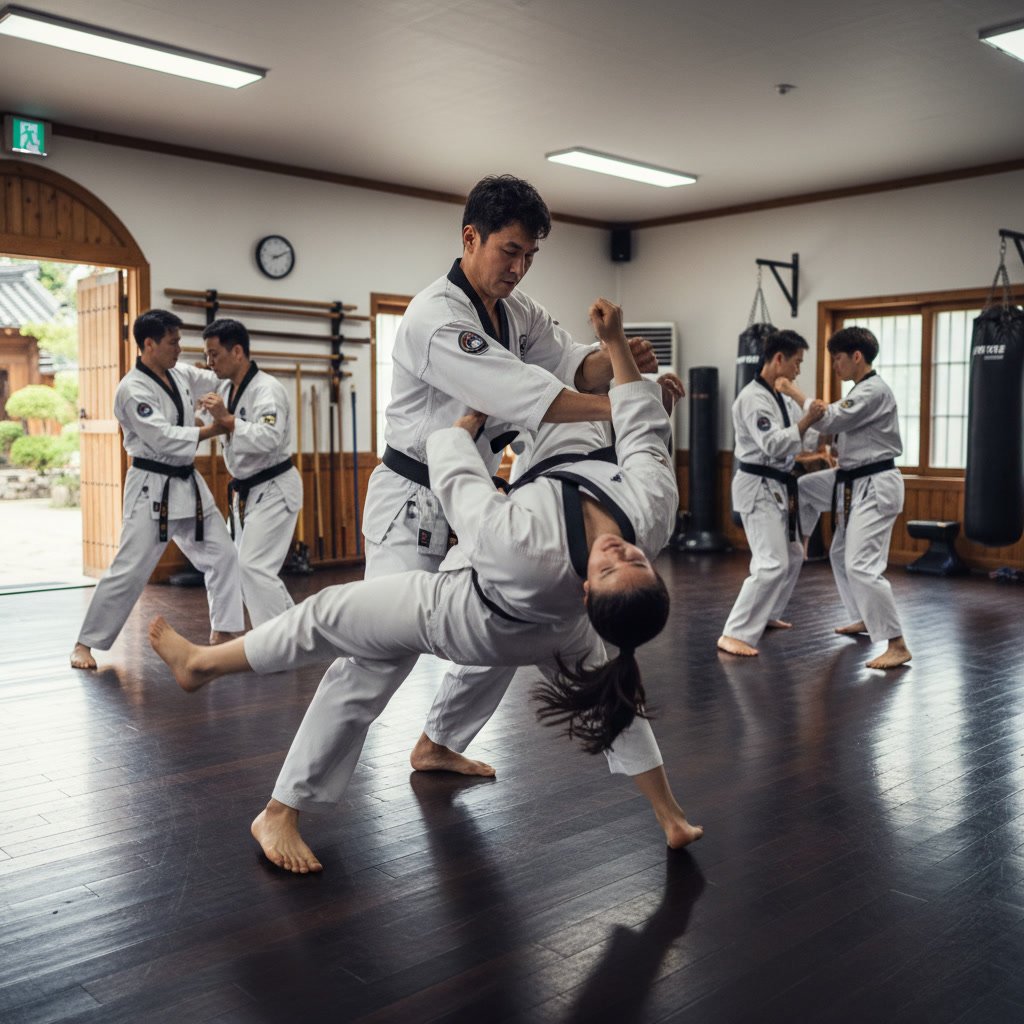
Traditional systems like Taekwondo and Hapkido structure their curriculum around thousands of repetitions for a specific neurological reason. Each technique begins as a conscious, awkward movement requiring full concentration. After 50 to 100 repetitions, the movement becomes smoother as your brain establishes basic neural connections. Between 500 and 1,000 repetitions, the movement transitions into the cerebellum, where automatic skills are stored.

The most critical phase occurs between 1,000 and 3,000 repetitions. During this window, your nervous system refines the movement pattern, eliminating wasted motion and optimizing the biomechanical efficiency. Professional athletes and martial artists often exceed 10,000 repetitions of core movements, creating responses so deeply ingrained they can execute them accurately while exhausted, injured, or under extreme psychological pressure.
Building Reflexive Responses in Lakeland Training Programs
Quality training programs structure practice sessions to maximize neural pathway development. A complete self-defense system incorporates progressive complexity, starting with isolated movements and gradually adding speed, resistance, and unpredictability. This layered approach ensures each component becomes automatic before combining it with others.
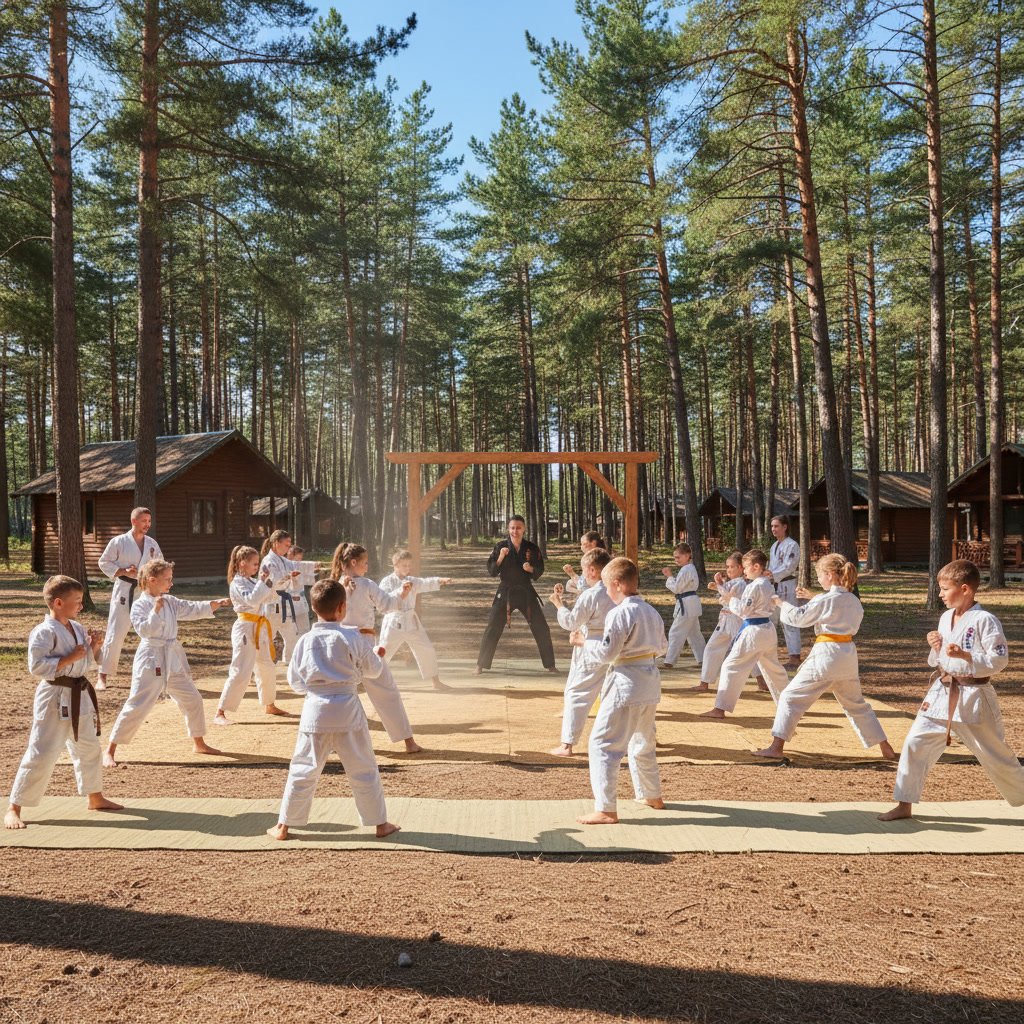
Students who train three times weekly for six months typically achieve 3,000 to 5,000 repetitions of fundamental techniques. This volume creates reliable automatic responses for basic blocks, strikes, and escapes. The key variable is not just quantity but quality. Each repetition must use correct form, proper breathing, and realistic speed. Sloppy repetitions build sloppy reflexes that fail under pressure.
How Stress Inoculation Training Strengthens Automatic Responses
Practicing techniques in a calm, controlled environment builds the initial neural pathways, but stress inoculation training ensures those pathways remain accessible during actual danger. Instructors gradually introduce stressors that mimic real confrontations: sudden attacks, multiple opponents, confined spaces, poor lighting, and verbal aggression. These elements trigger the same hormonal cascade you experience during genuine threats.
When you successfully execute a defensive technique while experiencing elevated heart rate, tunnel vision, and auditory exclusion, you strengthen the connection between stress and correct response. Your nervous system learns that these uncomfortable physical sensations are the cue to activate trained movements. Over time, the presence of danger becomes the trigger that automatically unlocks your defensive skills rather than freezing your decision-making capacity.
The Role of Scenario-Based Drills in Pattern Recognition
Complete defensive training extends beyond memorizing individual techniques. Your brain must also learn to recognize patterns that signal specific threats. Scenario-based drills train your visual and spatial processing systems to identify dangerous body language, positioning, and pre-attack indicators. This pattern recognition happens in the visual cortex and happens faster than conscious analysis.
A trained defender notices a weight shift, hand positioning, or aggressive advance and automatically initiates the appropriate defensive sequence. This recognition-response link develops through hundreds of scenario repetitions where training partners simulate realistic attacks. The diversity of scenarios matters as much as the volume. Practicing against 20 different attack variations builds broader pattern recognition than 1,000 repetitions of a single scenario.

Three Stages of Defensive Skill Development
Acquiring automatic defensive skills follows a predictable three-stage progression that applies across all martial arts disciplines.
Stage one: Cognitive learning. You learn the basic mechanics of a technique through demonstration and slow practice. Every movement requires conscious attention and verbal coaching. Execution is slow and often incorrect. This stage typically lasts 10 to 20 practice sessions for fundamental techniques.
Stage two: Associative refinement. You can perform the technique correctly but still need to think about it. Speed and accuracy improve significantly. You begin recognizing your own errors and making adjustments. This stage spans several months of consistent practice and encompasses repetitions 100 through 1,000.
Stage three: Autonomous execution. The technique executes automatically with minimal conscious oversight. You can perform it while focusing attention on other elements like footwork, distance management, or secondary threats. This stage emerges after 1,000 to 3,000 quality repetitions and continues refining indefinitely with advanced training.
Why Cross-Training Multiple Disciplines Accelerates Learning
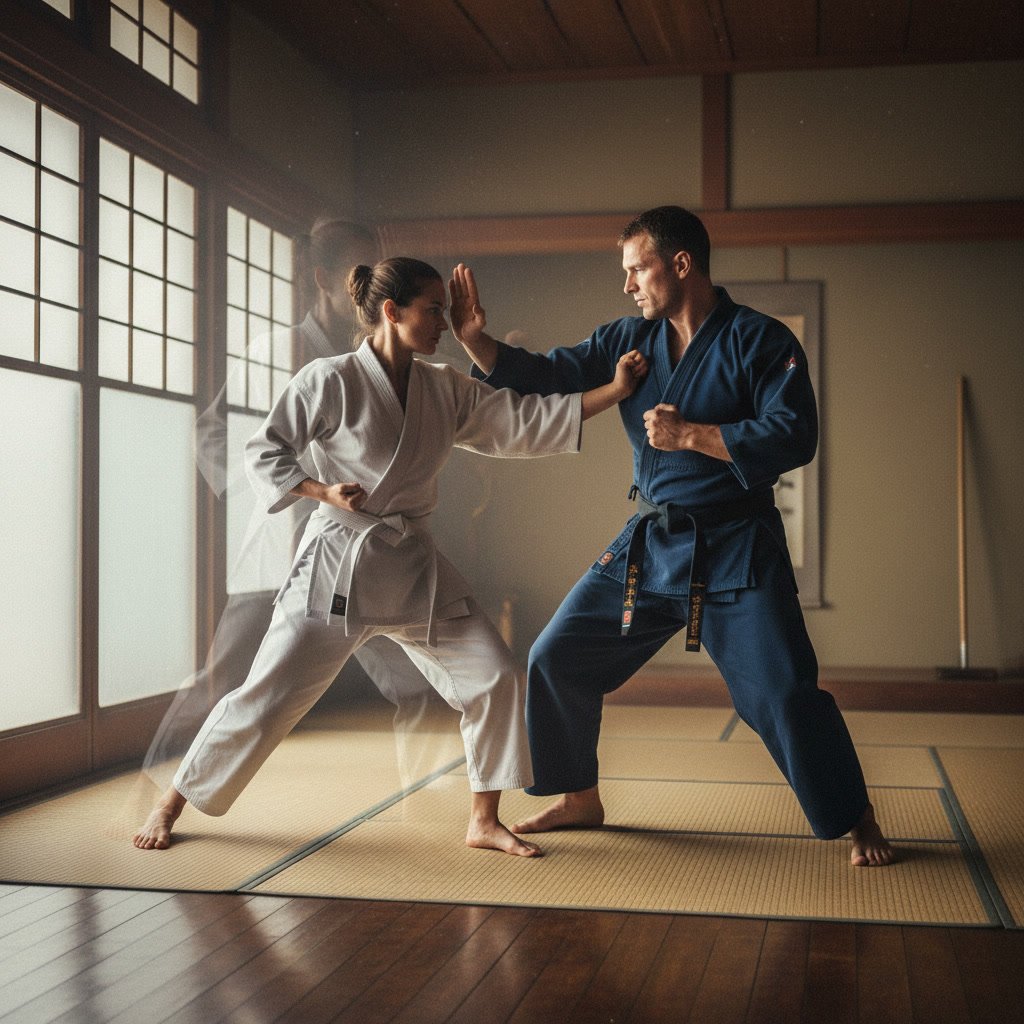
Integrated programs that combine striking, grappling, and evasion techniques create more robust neural networks than single-discipline training. When you learn a blocking technique in Taekwondo and a similar motion in Kickboxing, your brain builds multiple pathways to the same defensive movement. This redundancy makes the skill more accessible under stress.
Cross-training also develops adaptability. Real confrontations rarely match training scenarios exactly. A nervous system trained in multiple responses can improvise and adapt more effectively than one with a narrow skill set. Understanding how complete systems work in real situations helps clarify why integrated training produces more reliable defensive reflexes than specialized approaches.
Physical Conditioning and Neurological Performance
Cardiovascular fitness directly impacts how long your automatic responses remain effective during a confrontation. As your heart rate climbs above 145 beats per minute, fine motor skills deteriorate rapidly. Above 175 beats per minute, even gross motor skills become unreliable, and rational thought virtually disappears. Regular cardio training raises the threshold at which performance degrades.
A well-conditioned athlete can maintain accurate technique execution at heart rates that would incapacitate an untrained person. This endurance extends the window during which your practiced techniques remain accessible. The combination of cardiovascular conditioning and technical repetition creates the most resilient defensive capabilities. Training that isolates technique practice from physical conditioning leaves a critical gap in your defensive preparedness.

Gender-Specific Considerations in Defensive Training
Women face statistically different threat profiles than men, requiring specialized defensive training that addresses common attack patterns. Women’s self-defense programs emphasize techniques that work against larger, stronger opponents and scenarios involving familiar attackers rather than strangers. The muscle memory developed in these programs prioritizes early intervention, boundary-setting, and techniques that exploit biomechanical vulnerabilities rather than requiring superior strength.
Female students often develop faster pattern recognition for pre-attack indicators because training scenarios closely match real-world threat data. This specificity accelerates the transition from conscious technique to automatic response. The supportive training environment also reduces performance anxiety, allowing women to practice at higher intensity levels that better simulate actual confrontation stress.
Long-Term Retention and Skill Maintenance
Once established, automatic defensive responses remain accessible for years, even with reduced practice frequency. Research on motor skill retention shows that movements practiced to the autonomous stage retain 70 to 80 percent accuracy after 12 months without practice. However, speed and power degrade more rapidly than technique structure. Monthly refresher training maintains near-peak performance indefinitely.
The neural pathways themselves remain intact much longer than the physical conditioning that supports them. A student who trains intensively for two years, then stops completely, can often recover full defensive capability within four to six weeks of resumed training. The nervous system remembers the patterns and rebuilds them rapidly once practice resumes. This durability makes intensive defensive training a worthwhile long-term investment, even for people whose schedules may not allow permanent consistent practice.
Transforming Practice Into Permanent Protection
Building reliable automatic defensive responses requires consistent, quality practice over months and years. The transformation from conscious technique to unconscious reflex happens gradually through thousands of repetitions under progressively realistic conditions. Stress inoculation training, scenario-based drills, and cross-disciplinary practice accelerate this development while creating more adaptable, resilient skills. Physical conditioning extends the window during which these automatic responses remain accessible under extreme stress.
Jean’s Taekwondo INC offers comprehensive training that develops these automatic protective responses through integrated practice in striking, grappling, and realistic scenario work. Our programs serve students throughout Winter Haven and surrounding communities, building the repetition volume and training intensity needed for genuine defensive capability. Contact us at +18635851952 to learn how our structured curriculum can develop the automatic responses that protect you when conscious thought isn’t fast enough.